Geotagging Imagery and Video


IsWHERE is a log of my thoughts, reflections, and news/blog links on the emergence of image and video geospatial tagging. On May5th this year, I opened a second blog to deal with more detailed aspects of tools for FalconView and TalonView can be found at RouteScout. Trends I want to try and follow are the various disruptions resulting from spatial smart-phones, how many GPS devices are out there, smart-cameras, and other related news. And yes, I have a business interest in all of this. My company Red Hen has been pioneering this sort of geomedia for more than a decade.

So beyond a personal blog, I also provide a link to IsWHERE a shareware tool created by Red Hen Systems to readily place geoJPEG or geotagged imagery and soon GEM full motion media kept on your own computer(s) into Google Earth/Map from your File Manager media selection. Works great for geotagged images from Nikon, Ricoh, Sony, iPHONE, Android and all geo-smartphones that can create geotagged images. IsWhere - read about it

IsWhere Free Download (XP and VISTA)

<<<<<<<<<<<<<<<<<<<<<+>>>>>>>>>>>>>>>>>>>>>

IsWhere Visitors

Showing posts with label symbian. Show all posts

Friday, March 20, 2009

iPhone may Not have this Smartphone in the Bag...

Whow, that did not take long... comparison of the Smartphone OS's: iPhone OS, Android, webOS, Windows Mobile, BlackBerry, S60. What I personally find interesting is that the comparison is quite US orientated in that in that the dominate Smartphone OS, Symbian, trails in sort of last on the list. Why? Well the US absolutley lags in application of 3G.. heck Australia has already moved their nation to 3.5G. Nokia has more 3G phones out there by some will suggest a factor of 10. What is really going on here?

IMHO Nokia remains a one-handed smartphone solution where as the other smartphones rely on two handed control. Is a two-handed smartphone really any smarter or is simply larger.
So if you are in your car with a two-handed solution, well, be aware! iPhone lifted the game for everyone in the smartphone play but Android also offers something of pending interest. Symbian remains lurking... Nokia what are they doing?


Engadget Reveiws Six Smartphone Oper5ating Systems

As soon as Apple rolled out its preview of iPhone OS 3.0, the comparisons to existing (and forthcoming) mobile OSs started flying. While the major update isn't exactly a done deal, it's pretty far along, and we've been able to glean quite a bit from our time with the developer beta we've been checking out. iPhone OS, Android, webOS, Windows Mobile, BlackBerry, S60; if you're in the market for a new smartphone, your choices have been getting exponentially more complicated lately, and 3.0 won't make the selection any easier. Luckily for you, Engadget is here to make sense of a frightening and uncertain landscape. Read on for an in-depth look at the similarities -- and differences -- between modern mobile operating systems.

Saturday, September 13, 2008

Smartphones killing PDNs?

RIM beats Microsoft Mobile - Symbian looses 10 percent

Mobilewack

Isn’t this some good news? RIM surpasses Windows Mobile in market share for the second quarter of the year. RIM comes second after Symbian which dropped significantly from the same time last year. Amazingly Windows Mobile lost the second position although they have about the same market share they did last year.

BlackBerry is up to 17.4% from last year’s 8.9%. They have almost doubled their market share in a year. Apple went from 1% to almost 3% during the same period. The biggest looser seems to be Symbian which has lost about 10% from 65.6% to 57.1%.

Tuesday, June 24, 2008

Open Symbian...

This is going to be talked and blogged about... The very quick story is that Nokia will buy out all of Symbian and turn that into the Symbian Foundation which will provide the Symbian OS to all interested players as Open Source. This targets both Microsoft and Research in Motion's closed mobile operating systems as well as emerging challenges from Google's Android Open OS just now delayed till sometime next year. The move to Symbian Open Source will also create lots of comparison to Apple's apparently closed code and business model.

Symbian to go Open Source

To compete with Google and LiMo on an equal footing, Symbian will also become an open-source based platform. The Symbian Foundation will make some parts of the operating system available as open-source code at launch. More code from the project will be made available over the next two years under the Eclipse Public License, according to a statement.

During the first quarter of 2008 Symbian had a smartphone market share of 57.1 percent, followed by Research in Motion and Microsoft, at 13.4 percent and 12.0 percent respectively. Linux was the fourth largest platform with a market share at 9.1 percent, according to Gartner.

Also announced on Tuesday was the formation of the Symbian Foundation, which will come into being during the first half of next year with members including Nokia, Sony Ericsson, Motorola, NTT DoCoMo, AT&T, LG Electronics, Samsung Electronics, STMicroelectronics, Texas Instruments, and Vodafone Group. All will get access to the Symbian operating system under a royalty-free license.

The deal will unite Symbian's OS and S60, UIQ (which is run as a separate company, but owned by Sony Ericsson and Motorola), and MOAP, the software platform for NTT DoCoMo's FOMA service, to create one open mobile software platform and a stronger competitor in the battle with other platforms.

Friday, June 06, 2008

Smartphones - not a cheese sandwich

In 2007, worldwide smart-phone sales to end users grew 52.5% compared with 2006, reaching 122 million unit sales. 4Q07 was the strongest quarter on record, with sales up 50% year over year. Gartner - March 2008

So at this moment in time, June 2008, the best guess on total smart phones to be sold in the first two quarters of '08 would be something like 75 million units. What makes a smart phone? Well its all of the mobile phones that are not PDA-like - meaning if it looks like a large piece of bread when holding up to your ear (like a lot of the Microsoft Mobiles) its not a "smart-phone". A bit of a wobbly statistic qualifier I know but reasonably accurate IMHO.

That large classification behind us, I would then divide the world into to one handed smart-phones versus two-handed. RIM, Microsoft, and Apple are the essentially players in two-handed phone use so that is one group... maybe 30 percent of all smart-phones out there. And Android will likely further fragment that group mostly at the pain of Microsoft. Nokia's are essentially one handed smart-phone designs and have say 45 percent of all smart phones and only bit play in the two-handed domain. That leaves the remaining smart-phone players with 25 percent of worldwide smart-phones as mostly one-handed designs.

What is of common to the smart-phones...? They all connect to the Internet and have the potential to by-pass legacy phone connect services - hmmm pretty smart. All have cameras, some better than others (3 mega-pixel is so last month) and all but the less-smart-phones now have GPS. And if you are really a smart smart-phone user, your smart-phone has WiFi too! Nothing like getting your GB at a discount when your can!

Gartner's reports average $1500 a copy so you have to watch the smoke signals. And the smoke signals suggest the following to me:

Nokia dominates the category called smart-phones everywhere but in the US were it just does not yet have much market share. That is going to change as 3G really takes hold in the US in a significant way over the coming year. Currently, in the US RIM dominates as the defacto of the smart-phones followed by Apple iPHONE (wahoo!). World wide iPHONE is way back in the pack in count but likely number "uno" in passion and most-desired factors - it ain't no sandwich up against your head!

And I will really stretch out on this one... Symbian is no slouch OS... but what they do for two-handed smart-phones is yet to be seen? Apple is to die for but it will always be Apple's... Android, is a dark horse that will keep all the OS players honest but my suspicion is that the carriers are also going to be just a "bit" wary of Google's gift... somewhere in Google's "do-no-harm" the carriers will loose control and just be a bit-player in the big Ethernet?

And FYI... From Gartner via Computerworld's budget/leverage....


June 6, 2008 (Computerworld) While much of the attention in the U.S. smart phone market is on the next-generation iPhone, which is expected to be revealed by Apple Inc. on Monday, the global leader for smart phone sales is still Nokia Corp., analyst firm Gartner Inc. said in a report released today. Nokia had 45.2% of the worldwide market in the first quarter, followed by Research In Motion Ltd., the maker of BlackBerry, with 13% and the Apple's iPhone (first generation), with 5%, was third, Gartner said.

In the U.S., RIM was ranked No. 1, at 42% for the first quarter, while Apple was No. 2, at 20%, Gartner said. Earlier this week, research firm IDC reported similar findings, putting RIM in the U.S. at a 44% share and Apple at a 19% share.

Gartner found that RIM's global market share increased to 13.4% in the quarter, up from 8.3% in the first quarter a year earlier. The iPhone was not shipping until June 2007. Nokia slipped slightly to a market share of 45.2% this year from 46.7% in the same quarter last year, although the total number of units shipped rose from 14.5 million units in the quarter, up from 11.6 million in the first quarter of 2007.

Globally, total smart phone growth in the first quarter grew 29%, making up 11% of all mobile devices sold. Sales in the first quarter totaled 32.2 million units, Gartner said.

In Europe, Middle East and Africa, growth was 38.7% in the first quarter, compared to the first quarter of 2007, with 11.7 million units sold, Gartner said. Nokia is especially strong in Europe. By comparison, smart phone sales in North America were up 106% in the first quarter compared with the first quarter a year ago, with a total number of 7.3 million units sold.

Smart phone growth was driven by buyers replacing older phones, but also by new devices with touch screens and a variety of new applications, Gartner analysts said. Growth in the smart phone segment is expected to continue as more open-platform devices are announced, such as Android-based phones, they added.

Despite an economic downturn, the smart phone market continued to expand in the U.S., driven by lower-cost devices and heavy advertising and marketing, said Hugues De La Vergne, a Gartner analyst. Wireless operators in the U.S. and Canada are also giving the smart phone devices their attention, since they can provide higher revenue per user than more traditional devices, he added.

Globally, the fourth-ranked smart phone in sales was a tie between Sharp and Fujitsu, each with 4.1%, Gartner said. All other smart phone makers had nearly 28% of the market, but Gartner did not specify which devices. Microsoft Corp., maker of the Windows Mobile operating system, contends that Windows Mobile smart phones have the largest share globally, but their numbers are not included by either IDC or Gartner because they are sold across four device-makers and include ruggedized devices

Thursday, October 04, 2007

DIsplays for the Mobile Web

Displays for the Mobile Web

The Ken Werner at InsightMedia published this very insightful article about the "display" issues handicapping internet content accesses via the emerging smartphone.

I’m scheduled to give a presentation later today at the Mobile Web Americas conference here in Orlando on displays for Mobile Web applications, and I spent yesterday listening to reports of mobile standards developments, mobile web browsers, mobile search engines, mobile business models and mobile advertising strategies. Symantec has a mobile web security suite for the Windows Mobile platform and will soon come out with a version for Symbian.

There’s general agreement that LBSs (location-based services) will be a big business opportunity, and one that’s getting a lot of attention is location-based search. That is, the phone knows where it’s located via GPS or other means, and tells you where the nearest ATM or cholesterol-laden hamburger can be found. The feeling in the mobile search community is that the regular Web is much better at finding a hotel in Hong Kong or an HDTV from a national retailer than it is at helping you find a near-by place to repair your shoes. The vision is that mobile search can plug this huge gap in the Net. A talk by Alex Muller, CEO of GPShopper, summarized the position well. It’s title? "The Future of Retail; Why Mobile Matters Most for Local Search." Of course, wireless providers have to convince themselves there’s a way to make money out of this, and that may be on the verge of happening.

Another Mobile Web app is geotagging, in which a location tag is automatically used in an application. One possibility is to label each photo taken with the handset’s camera with the GPS-derived location of the photo, and then place flags on a Google map to show where each photo was taken.

A recurring theme at Mobile Web was the gymnastics mobile browsers, such as Opera Mini, Bitstream’s ThunderHawk, Nokia’s S60, and Microsoft’s mobile browser, must perform to deliver versions of an arbitrary website to all devices. This was tied to a still somewhat controversial philosophical position: "There is only one Web." That is, a mobile device should be able to see all of the sites a PC can, and not be limited to sites designed specifically for mobile platforms and (perhaps) designated as mobile sites....

At the heart of this debate, and of the ingenious developments of the mobile browser creators, is the difficulty of presenting full web pages on small displays. The new generation of mobile browsers do this remarkably well, but they are still dancing bears. It’s amazing that they dance at all, even if they don’t dance really well.

The problem is that with today’s mobile handset displays - and this year, for the first time, the display with the largest market penetration is, according to DisplaySearch, a 2.0-inch QVGA display - is that there just aren’t enough pixels and inches to go around for a fully satisfying web-browsing experience.

Monday, January 22, 2007

One Billion Cameras -

What Happens When A Billion People Worldwide Become Equipped With The Tools Of Visual Communication?

In the past four years the number of cameras in people’s hands worldwide has increased by 600%. It will double again over the next five years. Total number of cameras of all kinds sold in 2000: 85 Million units. Projected 2008 sales: One Billion units. Pervasive, web-connected imaging and the explosion of user-generated visual content are transforming how we communicate with each other in our personal, work, and community lives.

What happens when a billion users of many cultures, and scores of engineers and entrepreneurs, focus on new ways to enrich customers’ lives through imaging? What happens when R&D is fueled by an order-of-magnitude increase in economic reward? And what happens to the industry’s business models and value formulas?

FutureImage - 6Sight

Thursday, October 26, 2006

geoTagging eRRors an d Bias

I have been inspecting the results of the registering of my collections, aka catalogs, of geoEXIFed imagery placed into Google Earth by several pathways. To frame this story -

I have a tad over 11,000 geoEXIFed and other geo-tagged images collected during the last decade. My spatial image inventory has been collected with the various Red Hen Systems tools. Recently I have also been collecting from the WEB goe-spatial images shared via Flickr and Google Earth. I have also used Picasa.NET to move reospatial images around.

I also have spatial video, maybe 120 hours in aggregate - I have a couple of legacy tapes pending as my "one/first" Maxtor external 250GB external is pretty much full-up. With much procastination, blood, sweat, tears, and hours I have so far sucessfully rendered that stack of video down to 28 clips totalling 135 minutes of 30fps NSTC, PAL and MPEG-2 videos explaining maybe four or five stories or themes. Today, I am browsing that imagery via Picasa.NET and Adobe's Lightroom Beta. I have leared to be reasonably productive with Adobe Premier for the video. Red Hen imagery and video mapping products have contributed the spatial slice-and-dice environment as well as generation of ESRI personal geobase, HTML and Flash cartographic work-products. How many CODECs? Wouldn't bet it was less than a half-dozen? I want to find an easy way to do the same within Google Maps.

I was able to join in Picasa NET Beta some months ago and was excited when I found the "Geotag > View in Google Earth" Tool option. It didn't initially work (accept images) but offered the opportunity. Today the "View in Google Earth" Picasa.NET option does a reasonable job although in some places it is still a bit rough IMHO - like no obvious "Blogger" map in this Beta . While I can not fully endorse Picasa, the more I use it the better the results I get. The .NET version remains in Beta, you'll need to have a gmail account, and expect an update say every three to six weeks?

My 11,000 geotagged images come with all sorts of legacies, collection methods, GPS accuracies, and geoEXIFing method. These are a few of the sources that can contribute positional wobble and uncertainty to an image's absolute position. How much accuracy does a geo-photo require? It depends. And when combined, these errors and those found within Google Earth/Maps and the GIS sciences generally, sometimes disappoint expectations. I too have been disappointed and to channel frustration, I am trying to understand the various sources of pure bias, trend, and residual error as a worthy interest. For the GISer this is table-speak as we are longer toothed on issues of GPS and how to lie with maps. To better understand camera wobble - the photography domain I seek illumination. The next several notes following will try to explain what I have seen and what I think may be going on.

GPS WObble

In the "old" days, before WAAS and when SA=ON, GPS position was guaranteed to be 100 meters off at any time (2RMS) and as much as 300 meters off on the 3RMS+ extremes. My posting experience suggests that the GPS WObble for that era was more typically 20-40 meters.

More recently, GPS accuracy has improved from 100 to three meters, cost per device are under $150, and form is the size of a matchbook. My preferred GPS solution these days are SiRFstarIII chip-sets which delivers 20-channel, massively correlated and WAAS corrected NMEA strings over Bluetooth.

What sort of accuracy should we expect with current SiRFstar III Bluetooth GPS devices? There are many relative and absolute position qualities I could digress to but for now lets assume good WGS84 certainty at the street level. The GPS accuracy is a positional accuracy of a few meters. An operationally good GPS condition would indicate PDOP is low (<2),>6), each with matching RTCM differentials that are both tight in space and latency. These conditions when matched to smart GPS software calculating an over-determined solution, the SiRFstarIII chip-set should be delivering antenna location in WGS Lat/long six decimal precision to within three meters at 2RMS and under one meter CEP or half the time. Is this good enough? One meter gets you there when ten will not? Seems good for me but maybe a serious geo-cacher might drop in on us and set the story right? As for elevation error or noise, a rule-of-thumb is 2-3 times the X/Y 2RMS error.

In my spatial image collection, a good portion have PDOP as well as the presence or absence of the WAAS or other RTCM differentials. These are indices of GPS performance. For some elite catalogs with well populated EXIF headers there will be images with orientation, distance to POI, edition information, image adjustment, and other tags. In some cases, the image might have associated sensors and both their data records plus their meta data. Neither that fit well a standard EXIF structure. In this case, innovation has required a GPS "LOG" or companion files that includes both NMEA and $ proprietary strings.

Squinty Eyes and Picture WObble

As far as resolution of my geoEXIFed catalog, I have lots of VGA, 1.3 mega pixel, and five mega pixel JPEGs. I have five mega pixel hand-camera for years now and have almost gone SLR at home. As a point-and-shoot pointographer the sweet-spot 3.5 mp image seems the more likely adjustment via my next smartphone. I have used many versions of Nokia camera phones and have a Fuji five mega pixel FinePix must be four years old now. Its handled the abuse well although I have acquired some sort of fungus that is devouring something that supports the display. Pixels are dieing in a hyphael pattern. I am learning how to improve poor images. Picasa is does an Ok job but I prefer the feel, organization, and quality offered in Adobe's Lightroom Beta. I know how to fix some of the issues of digital camera error - white balance, lens jitter, lighting issues, and other cool stuff I too can move sliders and embellish "my" imagery.

Hard-knocks experience tells me its time to move beyond JPEG or even JPEG2000. I like what Microsoft is doing with SeaDragon, Windows Media Photo and Photosynth. These are products from their Media Lab's propeller heads and will soon appear with Microsoft's next-generation of OS.

I also have some other odd-sets received mostly from friends - all but a scant few via CD. I a very small but growing inventory of images received from the Internet via sharing. I really like immersive imagery and when well-done, I could digg 3D. So much so watch this space for more on 3D-immersion! I only print to paper a small number of images say 1:500. I am starting to get quite excited about the sharing of images as a digital proxy for paper printing.

I am certain I am finding location wobble that likely others have or are facing both knowing and not. This "wobble" should be considered a new source of lens jitter in digital imaging. Solution? Good technique and/or innovative technology can minimize this. Further each method to geoEXIF the image have both common sources of error and well as significant limitations.

I want an easy way to minimise duplication of my media. But I also want a reliable way to re-organize my work products to my camera phone and allow easy creation of CDs, DVDs, and external disk storage for my use and for my clients. I am finding it too easy in my processing to create duplicates. Worse is the related fear to delete something you know you don't need but are uncertain if you have consolidated all of the changes... and other subconscious Delete - are you certain? fears. And duplicates in Picasa are very confusing IMHO. The have a stub for dupes but I have yet to see a understandable result. So I will await the update?

Tuesday, October 17, 2006

Symbian Personal Navigation and Bluetooth GPS Transceivers

The Bluetooth GPS Transceiver (BtGPS) has a very high utility if you can demonstrate a must-have personal navigation device/solution. Interested? And navigation, I have heard is the necessary base of many rather cool LBS services .... soon to come.... someday?


Adding a BtGPS device to your "mobile" kit will cost around $100 and will be connected to your Symbian Series 60 with Bluetooth features in a few minutes. Then if your smartphone includes a "data plan" that provides you mobile Internet access, well, from that moment on and depending how you adapt to yet another blinking light and its battery hassles, you can:

  • find where you are,
  • locate where someone else is,
  • review where you have been,
  • calculate the best way of getting where you want to go, and
  • recall places or faces of interest you have found or want to find.
  • plus WiFi hotspot radar?

ALL with a geotagging positional tolerance of a only a meter or three.

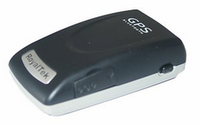
While there are many BtGPS devices, a MidNight recommendation would include "SiRF" and its chipset SiRFstarIII. These 20-channel, WAAS capable, and massively correlated devices can deliver a 2 meter CEP in low PDOP conditions. Bluetooth positional error of dilution is no greater than 10 meters most conditions. Main differentiations will be blink-blink, battery size, and stuff like TTFF CS and WS. I prefer RoyalTek RBT-2001 due to its smarter and compact implementation, TTFF CS, TTFF WS, and battery selection (identical to most Nokia handsets - 0.700 amp/hr). The RoyalTek's use of an easily-had NiCad battery offers an alternate charging path for the same battery form (12-15v cigarette plug step-down to 5-volt PDA/PND plug-end) which has rescued dead and dieing mobiles too many times to be dismissed.
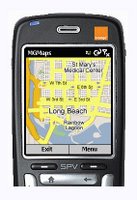
Once you have the BtGPS figured out, I am encouraging you to immediately download a copy of the MGmaps. It is a very excellent personal navigation device application for your Symbian 60 smartphone. Its a get your map anywhere/anytime via downloading Google Map streets and satelite images via the Google Mobile design.
http://www.mgmaps.com

You can also render the Nokia/Symbian application on your PC just to see it do its thing. You'll need to first check your JAVA and then likely download a JAVA set from the page below...

And you can share KMLs TOO!